
Dwelling coverage is one of the most important parts of a homeowners insurance policy because it helps protect the physical structure of your home when covered damage occurs.
What Does Dwelling Coverage Mean?
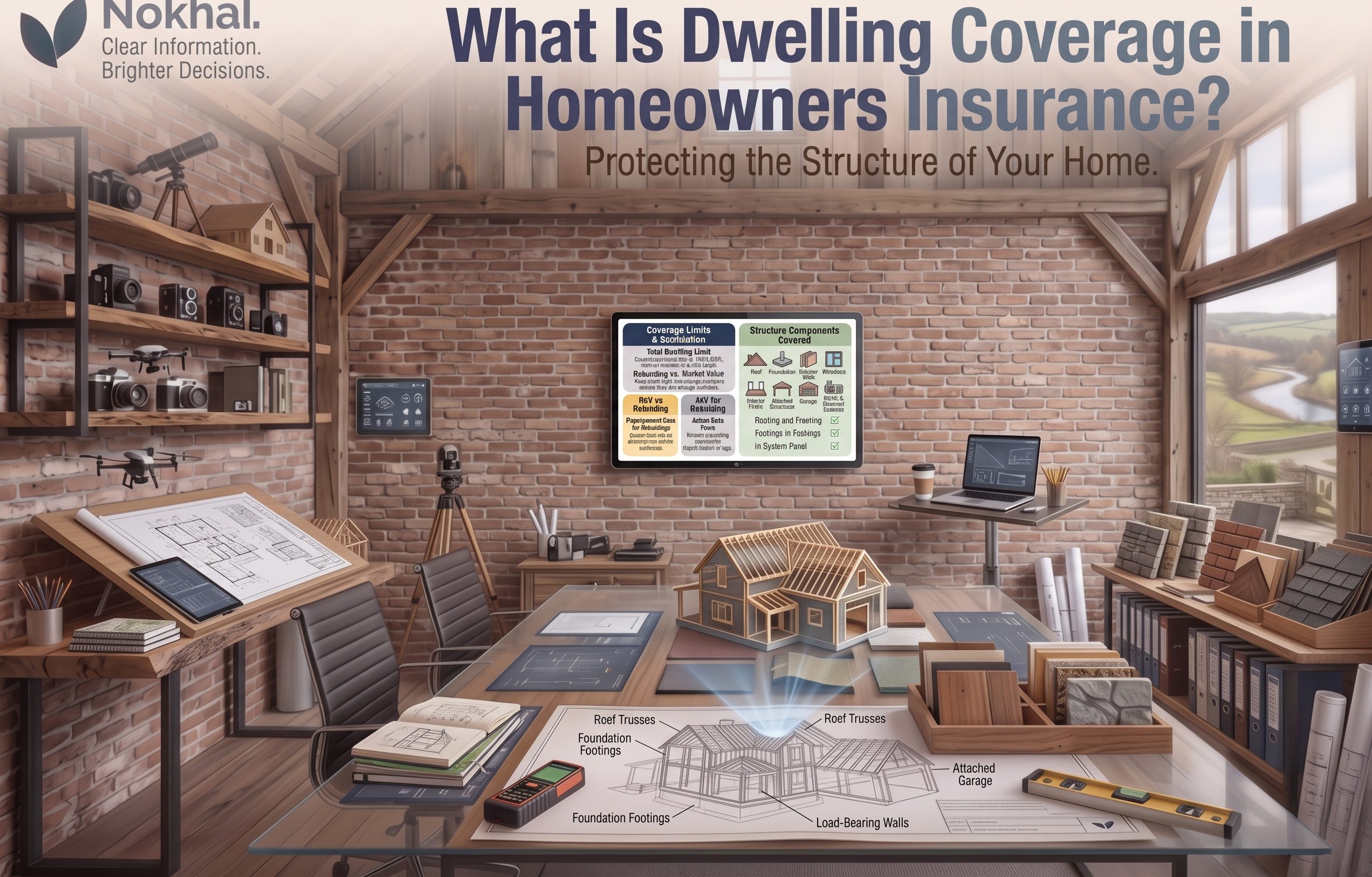
Dwelling coverage refers to the portion of a homeowners insurance policy that protects the main physical structure of your home. This generally includes the walls, roof, floors, ceilings and other permanently attached components of the house.
If a covered event causes significant damage to the structure, dwelling coverage can help pay for repairs or reconstruction, subject to the limits, deductible and conditions of the policy.
The amount of dwelling coverage is commonly shown as the limit for the home’s structure on the policy declarations page. Choosing an appropriate limit is important because the goal is generally to have enough coverage to rebuild the home after a covered loss.
What Does Dwelling Coverage Typically Protect?
Dwelling coverage is designed to protect the physical components that make up the home itself. Depending on the policy, this can include the roof, walls, floors, ceilings, built-in features and permanently installed systems or fixtures.
Covered causes of damage can vary by policy. Standard homeowners policies commonly provide protection for events such as fire, lightning, hail and certain other listed disasters. However, exclusions can apply.
For example, standard homeowners insurance generally does not cover flood damage, and earthquake coverage may require a separate policy or endorsement. Routine wear and tear and damage resulting from lack of maintenance are also generally excluded.
How Much Dwelling Coverage Do You Need?
The appropriate dwelling coverage limit depends on how much it would cost to rebuild your home using current construction costs. This amount can be different from the home’s current market value or the amount you originally paid for it.
Several factors can affect rebuilding costs, including the home’s square footage, local construction prices, the materials used, the style of the house, the number of rooms and bathrooms, the type of roof and any special architectural features.
Renovations and additions can also increase the potential cost of rebuilding. Updating your kitchen, adding a bathroom or expanding the home may change the amount of coverage you need.
Dwelling Coverage Is About Rebuilding Your Home
The amount of dwelling coverage should be based primarily on the estimated cost to repair or rebuild the physical structure after a covered loss. The market price of the property and the cost of rebuilding are not necessarily the same, so reviewing your coverage limit periodically can help keep your policy aligned with changing construction costs.
Dwelling Coverage vs. Other Home Insurance Coverages
Dwelling coverage focuses on the main structure of the home, while other parts of a homeowners policy protect different types of risks.
Personal property coverage generally applies to belongings such as furniture, clothing and electronics. Additional living expenses coverage can help with certain extra costs if a covered loss makes the home temporarily unlivable. Liability coverage addresses certain claims involving bodily injury or property damage for which the policyholder may be legally responsible.
Understanding these distinctions can make it easier to identify potential gaps in your homeowners insurance and determine whether additional coverage or endorsements may be appropriate.
Why Should You Review Your Dwelling Coverage?
Construction costs can change over time, and improvements to a home can increase the cost of rebuilding. For that reason, it can be useful to review your dwelling coverage after major renovations, additions or other significant changes to the property.
Some policies may also offer features such as inflation protection or extended replacement cost coverage. Availability and conditions vary by insurer and policy, so homeowners should review the details of their specific coverage.