
A beginner-friendly guide to understanding whether homeowners insurance covers water damage, the difference between sudden and gradual issues, and what policies typically include.
Does Homeowners Insurance Cover Water Damage?
Water damage is one of the most common reasons homeowners file insurance claims. Whether a standard policy covers it depends entirely on the source of the water and how the damage occurred. Generally, standard home insurance covers water damage if it is sudden and accidental, such as a pipe bursting unexpectedly.
However, damage resulting from lack of maintenance, wear and tear, or external flooding is typically excluded. Knowing the distinction between covered events and exclusions is essential for protecting your home and finances.
Sudden Accidents vs. Gradual Damage
The golden rule of home insurance regarding water damage is timing. If a supply line suddenly snaps and floods your kitchen overnight, that is usually considered a sudden and accidental event covered by your policy.
On the other hand, if a pipe has been leaking slowly behind a wall for six months, causing rot and mold, insurers generally view this as gradual damage resulting from deferred maintenance, which is the homeowner’s responsibility.
Common Scenarios: What Is Covered vs. Excluded
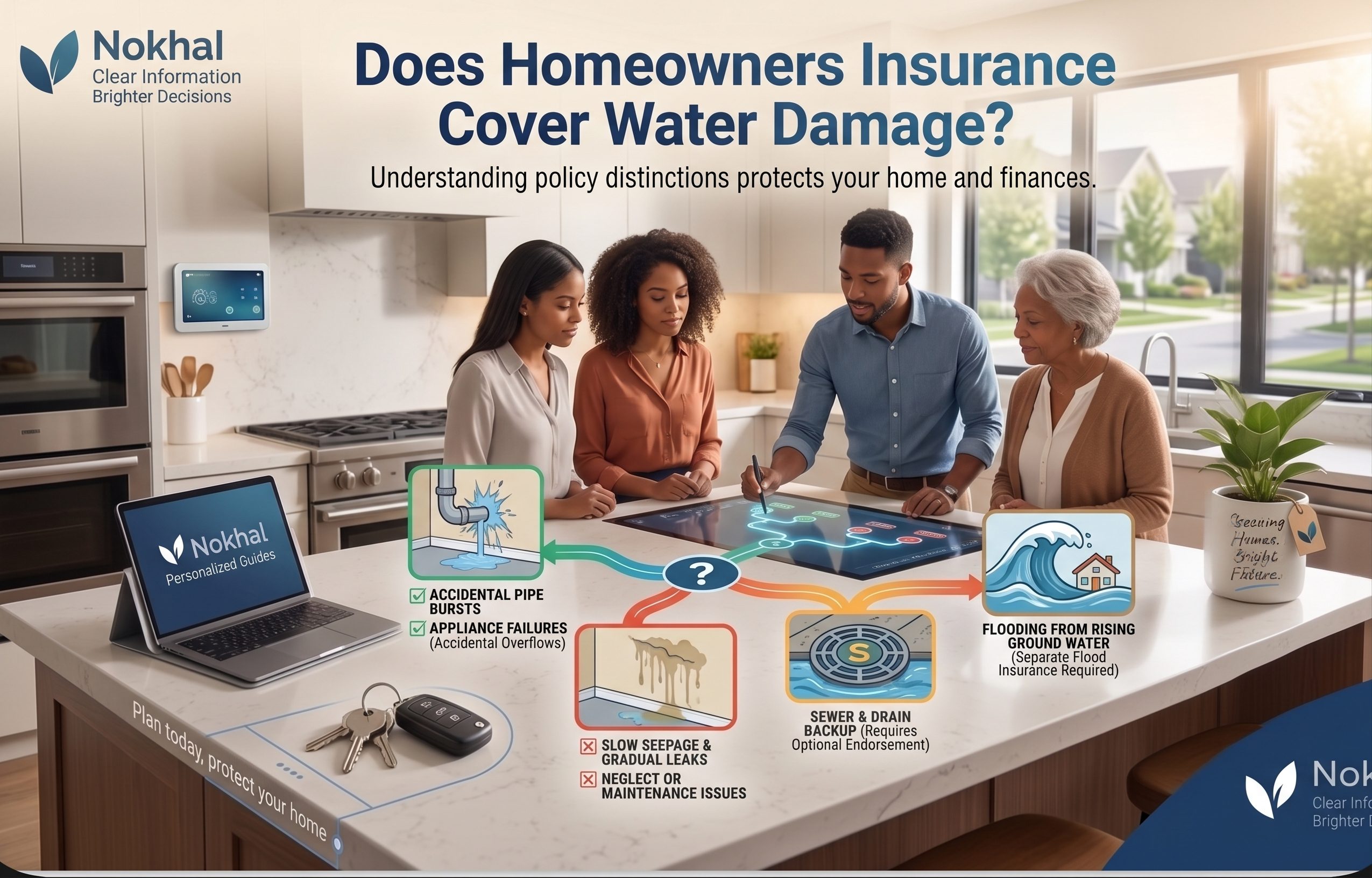
To help clarify policy boundaries, here is how standard insurance generally treats common water-related incidents:
Commonly Covered Events
Burst plumbing pipes, accidental overflow from a washing machine or bathtub, and rain entering your home because a severe storm tore a hole in your roof are usually covered under standard dwelling and property provisions.
Commonly Excluded Events
External flooding from heavy rainstorms overflowing rivers or groundwater rising into a basement are strictly excluded from standard policies and require a separate flood insurance policy.
Protecting Your Home Against Water Damage
Managing water risk involves understanding both policy terms and proactive home maintenance strategies:
Check plumbing fixtures, hoses, and roof integrity routinely to prevent gradual leaks from turning into major structural losses.
Consider adding specific endorsements for sewer or drain backups, as these are normally excluded from basic policies.
Timing and Source Matter Most
When assessing water damage claims, insurers focus heavily on whether the incident was sudden and accidental or caused by long-term neglect. Reviewing your policy details helps avoid surprises.
Reviewing Your Water Damage Protection
Take time to read through your homeowners insurance declarations page to understand what water-related perils are included and where coverage gaps might exist. Being prepared can save you substantial out-of-pocket costs.