
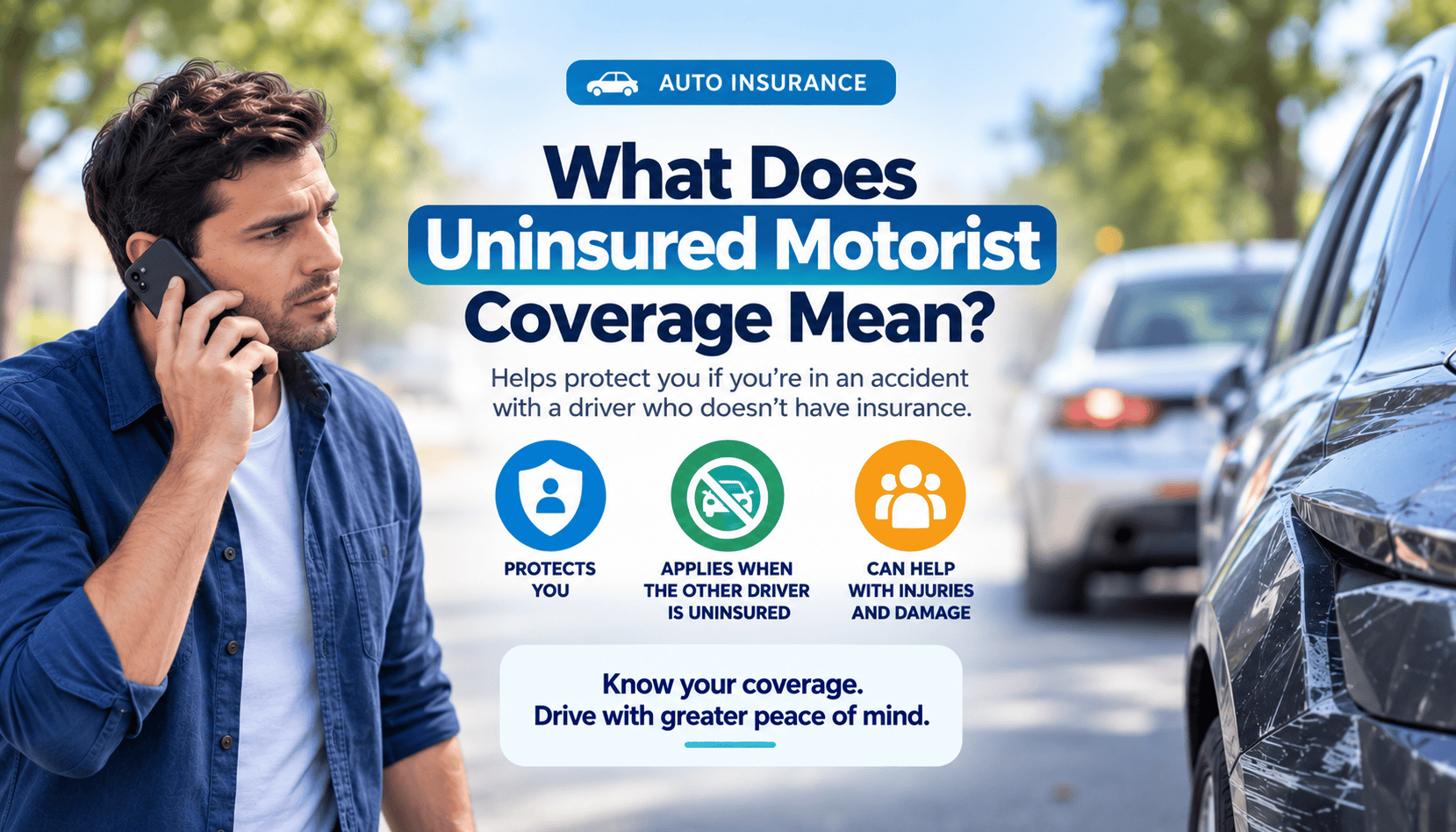
Uninsured motorist coverage is designed to provide protection in certain situations when you are involved in an accident with a driver who does not have auto insurance. Understanding what this coverage means can make an important part of an auto policy much easier to recognize.
What Is Uninsured Motorist Coverage?
Uninsured motorist coverage is a type of auto insurance protection that may apply when an insured person is involved in an accident with a driver who does not carry auto insurance.
Its purpose is to help address certain eligible losses that might otherwise have been the financial responsibility of the at-fault driver’s liability insurance. Exactly what is covered depends on the policy and the rules that apply where the policy is issued.
How Does Uninsured Motorist Coverage Work?
Imagine that another driver causes an accident but does not have liability insurance. Instead of relying only on that driver’s insurance, eligible uninsured motorist coverage may provide protection through your own auto policy.
A claim still needs to be reviewed by the insurer. The circumstances of the accident, available evidence, policy limits, applicable exclusions and the type of uninsured motorist coverage all influence how a claim may be handled.
What Can Uninsured Motorist Coverage Help With?
Uninsured motorist protection is not necessarily identical in every policy. Depending on the coverage purchased and the location, different parts of the protection may address different types of losses.
Bodily Injury
Uninsured motorist bodily injury coverage may help address certain eligible injury-related losses when an uninsured driver is responsible for an accident.
Property Damage
Some policies or locations may provide uninsured motorist property damage protection for eligible damage to a vehicle or other covered property.
Other Eligible Losses
Additional eligible losses can depend on the type of uninsured motorist coverage, policy language and rules that apply to the claim.
Uninsured vs. Underinsured Motorist Coverage
The words uninsured and underinsured sound similar, but they describe different situations. An uninsured driver generally has no applicable liability insurance for the accident.
An underinsured driver has insurance, but the available liability limits may not be sufficient to address all eligible losses resulting from an accident. Some auto policies address these situations through separate or related coverages.
Uninsured or Underinsured?
A Simple Uninsured Motorist Example
Consider a simplified situation in which Driver A is stopped at an intersection and another vehicle causes an accident. The other driver is determined to be responsible but does not have applicable auto liability insurance.
If Driver A has applicable uninsured motorist coverage, a claim may be made under that coverage. The insurer would then review the accident and determine which losses, if any, are eligible under the policy.
What About a Hit-and-Run Accident?
Hit-and-run accidents can create additional insurance questions because the other driver may not be identified. Whether uninsured motorist coverage applies to a hit-and-run situation depends on the policy and applicable rules.
For that reason, it is important not to assume that every unidentified-driver accident will automatically be handled in the same way. Policy definitions and claim requirements can differ.
Does Uninsured Motorist Coverage Have Limits?
Yes. Like other auto insurance protections, uninsured motorist coverage generally has coverage limits. A limit is the maximum amount the policy may provide for an eligible covered loss, subject to the terms of the policy.
Policies may describe limits in different ways, including amounts that apply per person, per accident or to property damage. The declarations page and policy documents identify the limits that apply to a specific policy.
Is Uninsured Motorist Coverage Required?
Requirements for uninsured motorist coverage are not the same everywhere. Depending on the location, insurers may be required to include or offer certain uninsured or underinsured motorist protections, while different rules may apply elsewhere.
This is why general insurance education should be separated from the requirements of a specific policy or jurisdiction. Drivers can review their policy documents and applicable local requirements to understand what applies to them.
Uninsured Motorist Coverage in Simple Terms
Uninsured motorist coverage can provide an additional layer of protection when an at-fault driver does not have applicable auto insurance. Depending on the policy, the protection may relate to eligible bodily injury, property damage or other covered losses.
It is different from liability, collision and comprehensive coverage because it addresses a different insurance problem: what may happen when another responsible driver lacks the insurance that would normally respond to the accident.