
An insurance grace period is a limited amount of time after a premium payment is due during which you may still make the payment and avoid losing your coverage. The length and rules of a grace period depend on the type of insurance, policy terms, and applicable regulations.
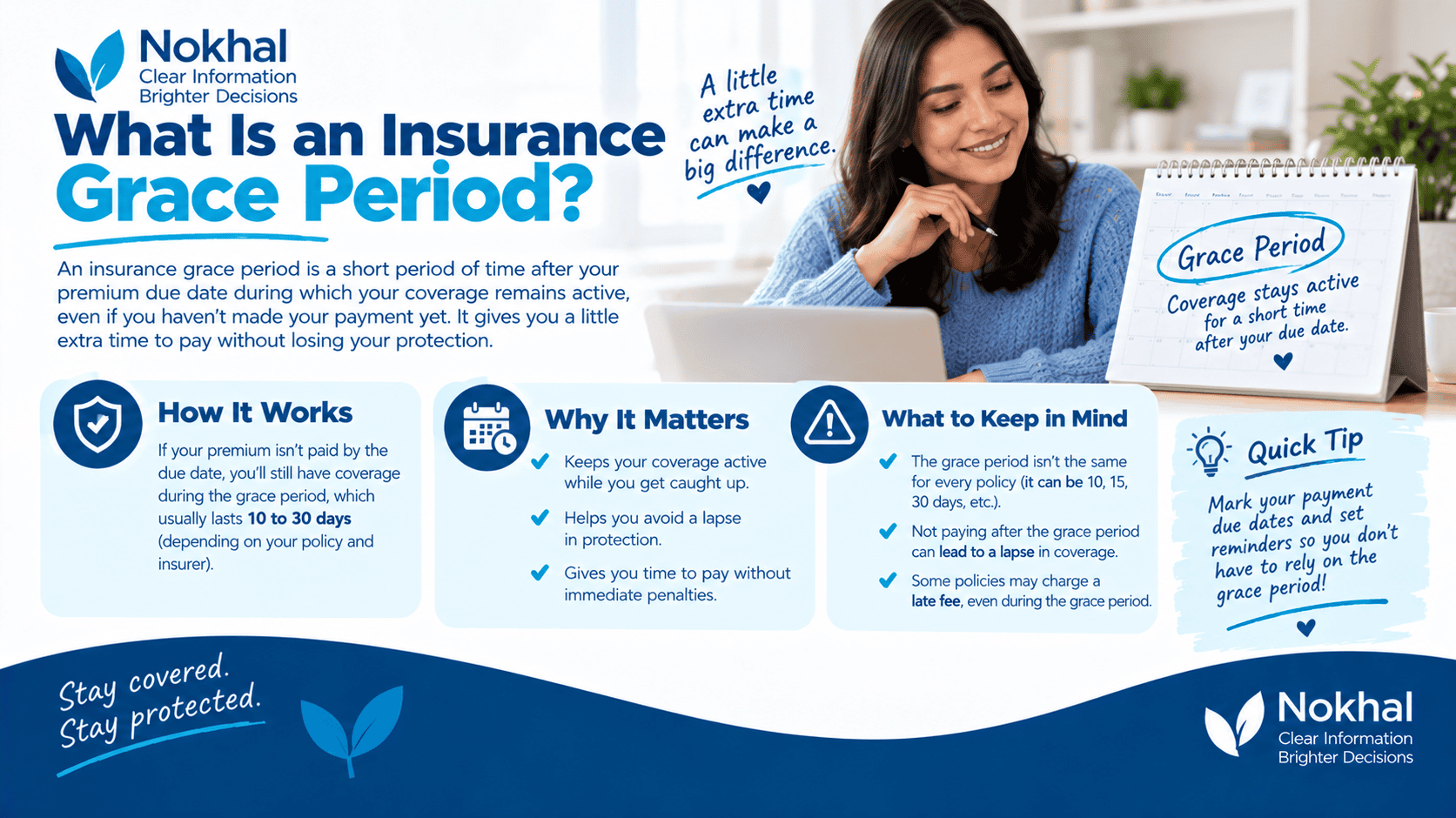
What Is an Insurance Grace Period?
An insurance grace period is a short period of time allowed after a premium payment deadline has passed. It gives the policyholder additional time to pay the amount due before the policy may be terminated or lapse because of nonpayment.
The purpose of a grace period is to provide additional time to make a late premium payment. However, it does not mean that premiums can be paid whenever convenient. The policyholder still needs to pay the required amount within the applicable grace period to maintain coverage.
The rules can vary considerably between insurance products. The policy documents and applicable state or federal requirements determine how long the grace period lasts and what happens to coverage during that time.
How Does an Insurance Grace Period Work?
A typical grace-period process can be understood in a few basic steps:
- Premium becomes due: The policyholder is expected to make the required payment by the date specified by the insurer.
- Payment is missed: If the premium is not paid on time, the policy may enter a grace period instead of immediately ending.
- Additional time is provided: The policyholder has the period specified by the policy or applicable law to pay the overdue premium.
- Payment is completed: If the required premium is paid within the applicable period, coverage may continue according to the policy terms.
- Grace period expires: If the required payment is not made, the policy may lapse or coverage may terminate, depending on the type of insurance and applicable rules.
A grace period should therefore be treated as extra time to correct a missed payment, not as an extension that eliminates the obligation to pay the premium.
How Long Is an Insurance Grace Period?
There is no single grace-period length that applies to every insurance policy. The time allowed depends on the type of coverage, the policy, and the rules in the applicable jurisdiction.
| Insurance Type | Example of Grace-Period Rules |
|---|---|
| Life insurance | Some life insurance policies provide a minimum 31-day grace period for premium payments. |
| Marketplace health insurance | A 3-month grace period generally applies when specific Marketplace and premium tax credit conditions are met. |
| Other insurance | The applicable period can depend on the policy, insurer, type of coverage, and state requirements. |
For example, HealthCare.gov explains that certain Marketplace plans using a premium tax credit can have a three-month grace period after a missed monthly premium, while other health plans may have different rules.
For life insurance, state insurance regulators commonly describe a minimum 31-day grace period for premium payments under applicable policies.
A Grace Period Does Not Mean Free Extra Coverage
A grace period gives you additional time to pay an overdue premium under the applicable rules. If you do not pay what is required before the grace period ends, your coverage may lapse or terminate. The exact consequences depend on your insurance policy and applicable regulations.
What Happens If You Do Not Pay During the Grace Period?
If the overdue premium is not paid before the grace period expires, the insurer may terminate the policy or allow it to lapse according to the policy terms and applicable law.
The consequences can vary by insurance type. With some health insurance plans, coverage may be terminated for nonpayment, and the effective date of termination can depend on when the missed payment occurred. HealthCare.gov notes that certain Marketplace plans can have coverage terminated retroactively to the first month for which a premium was missed if the required premiums are not paid by the end of the grace period.
For life insurance, failure to pay the premium before the grace period ends can cause the policy to lapse. Depending on the policy, reinstatement may be possible under specific conditions, but this is different from simply making the original payment on time.
If you miss a payment, contact your insurer as soon as possible. Ask how much is owed, when the grace period ends, whether coverage remains active, and what steps are required to keep or reinstate the policy.