
Collision coverage is a type of auto insurance designed to help with certain repair or replacement costs when your vehicle is damaged in a collision. Understanding when it applies, how the deductible works and what it generally does not cover can make this part of an auto policy much easier to understand.
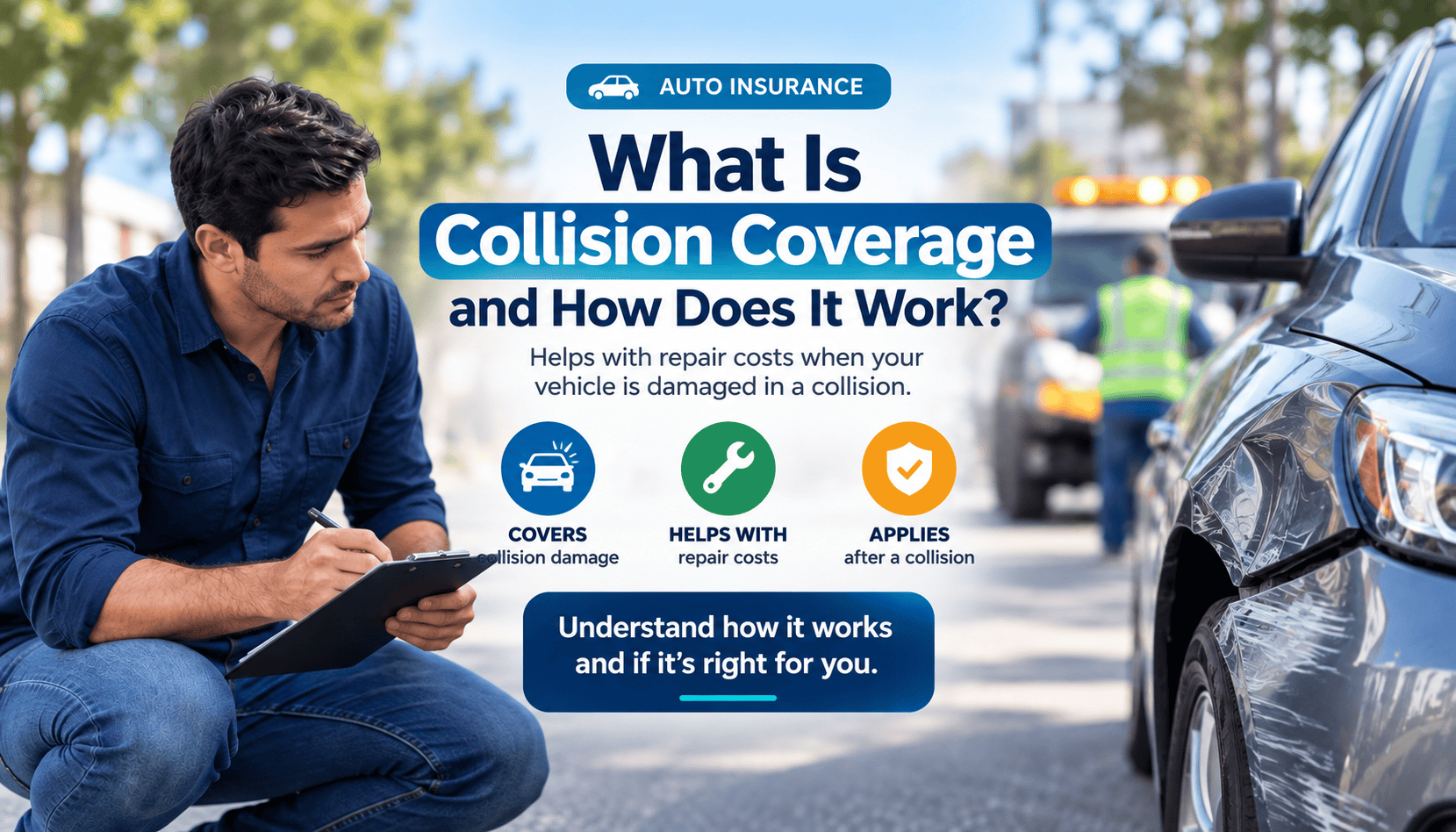
What Is Collision Coverage?
Collision coverage is an optional part of many auto insurance policies that generally helps pay for eligible damage to your own vehicle after a collision. It can apply when your car collides with another vehicle or with an object such as a guardrail, fence or tree.
Unlike liability coverage, which primarily addresses certain injuries or property damage involving other people, collision coverage focuses on certain physical damage to the insured vehicle itself.
How Does Collision Coverage Work?
After a covered collision, a claim can be submitted to the insurer. The insurer reviews the circumstances, evaluates the vehicle damage and determines whether the loss is covered under the terms of the policy.
If the claim is covered, the policy may help with eligible repair or replacement costs after the applicable deductible. The amount available also depends on the policy terms and the value of the covered vehicle.
What Types of Accidents May Collision Coverage Include?
Collision coverage is associated with physical damage caused by certain types of collisions. The exact circumstances covered depend on the policy, but several common examples can help explain its purpose.
Collision With Another Vehicle
Eligible damage may be covered when your vehicle collides with another car, truck or other vehicle.
Collision With an Object
Collision coverage may apply when your vehicle hits an object such as a guardrail, fence, pole or tree.
Rollover Accidents
Depending on the policy and circumstances, eligible vehicle damage resulting from a rollover may fall under collision coverage.
How Does the Collision Deductible Work?
Collision coverage commonly includes a deductible. The deductible is the amount the policyholder is responsible for before insurance contributes toward an eligible covered loss.
For a simplified example, imagine that eligible collision repairs cost $3,000 and the policy has a $500 collision deductible. The policyholder would generally be responsible for the $500 deductible, while the insurer could pay the remaining eligible amount according to the policy terms.
Collision repair with a deductible
This is only a simplified educational example. Actual claim payments depend on the policy and circumstances of the loss.
What Does Collision Coverage Generally Not Cover?
Collision insurance is not designed to cover every possible cause of vehicle damage. Events that do not involve a collision may fall under another part of an auto insurance policy.
For example, certain losses involving theft, weather, falling objects or other non-collision events are generally associated with comprehensive coverage rather than collision coverage. The actual policy determines how a specific loss is handled.
Collision vs. Liability
What Happens If the Vehicle Is Severely Damaged?
In some accidents, repairing a vehicle may not be economically practical compared with its value. When a covered vehicle is considered a total loss, the claim may be handled differently from a standard repair claim.
How vehicle value is determined and how much may be payable depends on the policy, applicable deductible, vehicle information and claim circumstances. Collision coverage does not automatically guarantee the cost of purchasing a new replacement vehicle.
Is Collision Coverage Always Required?
Collision coverage is not necessarily required in every situation. Insurance requirements vary by location, and liability coverage is different from collision coverage.
However, a lender or leasing company may have its own insurance requirements while a vehicle is financed or leased. Drivers should review their policy documents and any applicable financing or lease requirements to understand what applies to their situation.
Collision Coverage in Simple Terms
Collision coverage generally helps address eligible physical damage to your own insured vehicle after certain collisions. It can apply to accidents involving another vehicle, an object or other covered collision events.
The deductible, vehicle value, policy terms and circumstances of the accident all play a role in how a claim is handled. Understanding those elements makes it easier to see how collision coverage differs from liability and comprehensive insurance.